 Speaking the truth... | Town Crier News Nigeria | Whatsapp No: 08027723347, 08072777599,08122784467,09063474539

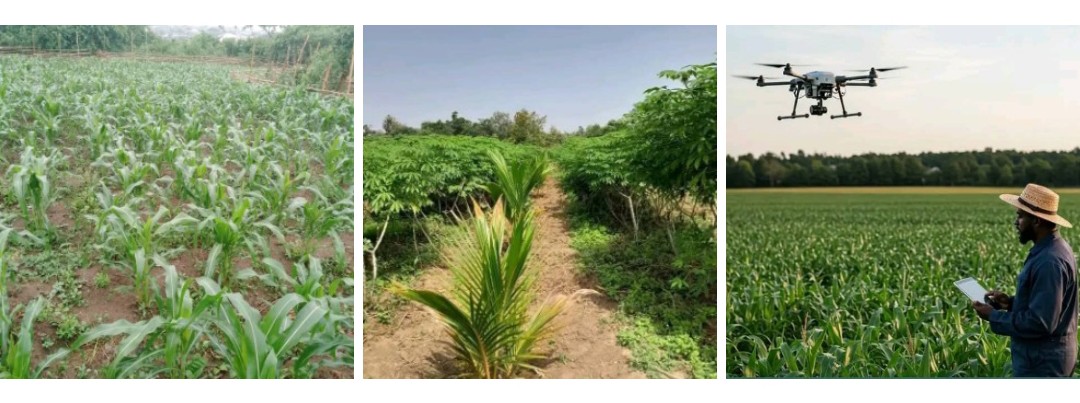
FROM SOIL TO SURVIVAL: HOW COMMUNITY FARMS ARE FEEDING NIGERIANS AND CREATING JOBS
Written By Dedeigbo Samson Ayodeji
Posted By Town Crier News Nigeria
Published By Fitness Network Communications
As food prices rise and jobs shrink, young Nigerians are turning abandoned land into farms, using WhatsApp, irrigation kits and cooperatives to build new rural-urban economies.
Young Nigerians are increasingly turning to agriculture as rising food prices and limited job opportunities push them to find new ways of earning a living.
The shift is happening at a time when Nigeria faces a growing demand for food.
The Food and Agriculture Organisation says the country needs to produce 20 per cent more food by 2026 to meet demand, while food imports cost about $10 billion annually.
Agriculture remains Nigeria’s largest employer, accounting for 35.4 per cent of GDP and 70 per cent of jobs in the second quarter of 2025, according to the National Bureau of Statistics.
But the people entering the sector are changing, with more young graduates and entrepreneurs seeing farming as a business rather than simply a traditional occupation.
For 27-year-old Sadiq, a university graduate who struggled to find a job, farming began as a last resort.
The land he now works on had been abandoned for five years.
Today, it produces ugu, pepper and tomatoes that feed about 200 households.
“I didn’t plan to farm,” he says.
“But now it feeds me and supports my family.”
Sadiq’s experience is being repeated in different parts of the country.
The FMARD 2024 Youth in Ag Report shows that 43 per cent of new agripreneurs are between the ages of 18 and 35, with many leaving cities to take up farming on peri-urban land.
The growing interest is also creating opportunities beyond the farm.
Every hectare of vegetable farming creates between three and five direct jobs and more than 10 indirect jobs in transportation, packaging and sales.
Across communities from Ogun to Kaduna, unused plots are being converted into cooperative farms.
Groups of 10 to 20 young people lease land, pool between ₦50,000 and ₦200,000 and share the profits.
For some graduates, these farms have become their first source of income since completing the National Youth Service Corps.
For others, they provide an opportunity to build businesses while contributing to the food supply in their communities.
Producing food closer to where people live can also reduce transportation costs by about 30 per cent and lessen dependence on supply chains bringing food from the North.
This gives community farms a role not only in job creation but also in making food more accessible.
The cooperatives are also becoming support systems.
Farm groups often double as savings cooperatives, allowing members to share tools, knowledge and risks while rebuilding trust within communities facing economic hardship.
The new generation of farmers is also bringing technology into the process.
Young farmers use WhatsApp groups, Instagram and Nairaland to sell directly to consumers and restaurants.
By cutting out two or three middlemen, they can reduce post-harvest losses from about 40 per cent to below 15 per cent.
Small-scale drip irrigation kits costing about ₦30,000, organic pesticides and solar dryers are also helping farmers work more efficiently on smaller plots.
Private companies are providing support as well. Nestlé Nigeria runs Sustainable Sourcing and Farmer Training programmes that train more than 5,000 smallholders on improving yields for maize, soy and cocoa. ThriveAgric and Babban Gona also provide inputs and guaranteed off-take.
But the growth of community farming does not mean the obstacles have disappeared.
Land remains a major challenge. About 70 per cent of peri-urban land has unclear titles, leaving many young farmers dependent on borrowed or family land and making long-term investment more difficult.
Access to finance is another obstacle. Only four per cent of bank loans go to agriculture, according to 2024 CBN figures, leaving many young farmers to depend on personal savings or contributions from their cooperatives.
Infrastructure presents another problem. Poor roads and limited cold-chain facilities mean that as much as 50 per cent of vegetables can rot before reaching the market, according to the UN Food and Agriculture Organisation.
These challenges mean that the success of community farming will depend not only on the willingness of young people to farm but also on whether they can access secure land, affordable finance and reliable infrastructure.
Experts say improving land documentation, providing young farmers with access to the ₦500 billion CBN Agri-Business Fund and building rural roads could unlock five million more jobs.
Agriculture is no longer simply “what our fathers did.”
For many young Nigerians, it is becoming a practical way to earn a living, create jobs and strengthen their communities.
From an abandoned plot in Lagos to a cooperative in Kano, the message is clear: when you invest in soil, you invest in people.
If Nigeria gets this right, it will not only grow crops.
It will grow stronger communities, healthier children and a new generation of agri-entrepreneurs.
The future of food and jobs is being planted right now.