 Speaking the truth... | Town Crier News Nigeria | Whatsapp No: 08027723347, 08072777599,08122784467,09063474539

THE ₦3.5 TRILLION TRASH: TACKLING FOOD WASTE TO FEED NIGERIA AND SAVE THE PLANET
Written By Dedeigbo Samson Ayodeji
Posted on Town Crier News Nigeria
Published By Fitness Network Communications
As climate change bites and food prices rise, traders, startups and communities are drying, redistributing and digitising surplus food to cut emissions and fight hunger.
Nigeria is losing about ₦3.5 trillion worth of food every year, even as millions of Nigerians struggle to afford enough to eat, turning food waste into an economic, environmental and food security challenge.
The United Nations Food and Agriculture Organisation estimates that about 40 per cent of food produced in Nigeria is lost annually, with fruits and vegetables recording losses of about 50 per cent.
At the same time, 26.5 million Nigerians face food insecurity, exposing the contradiction between food being discarded and food being needed.
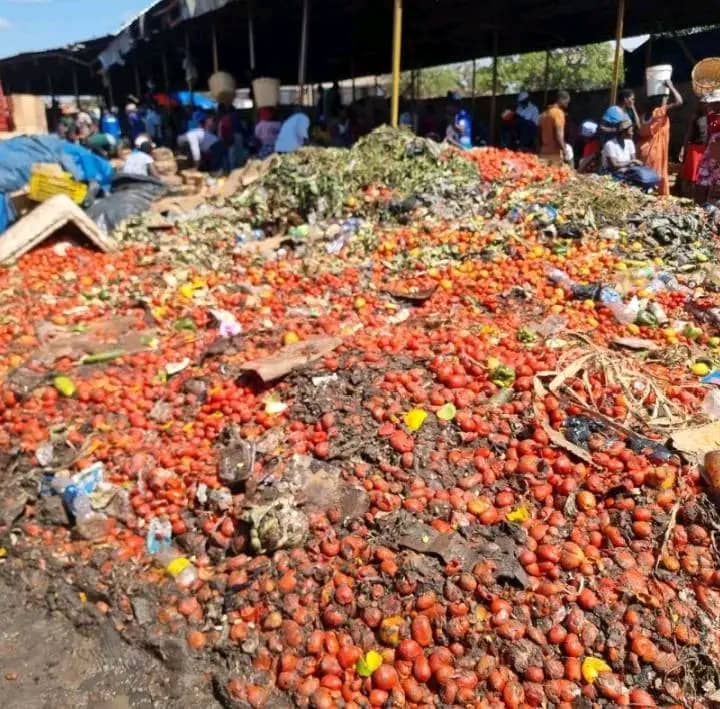
The waste is particularly visible in major markets.
By night at Mile 12 Market in Lagos, piles of rotten tomatoes and pepper can cover parts of the floor, with much of the unsold produce eventually taken to dumpsites such as Olusosun.
The problem goes beyond what is left behind by traders.
When food decomposes in landfills, it produces methane, a greenhouse gas 28 times more potent than carbon dioxide.
The World Bank estimates that organic waste accounts for 18 per cent of Lagos’ methane emissions, making food waste part of the city’s wider climate challenge.
Market refuse also affects urban environments.
In Lagos, Kano and Port Harcourt, discarded food and other waste can clog drainage channels, increasing the risk of flooding and creating unhygienic conditions that can encourage diseases such as cholera and typhoid.
Much of the waste begins with weaknesses in the food supply chain.
Only 12 per cent of Nigerian markets have reliable refrigeration, according to NIRSAL, leaving highly perishable produce vulnerable to spoilage.
A crate of tomatoes, for instance, can go bad within 48 hours when there is no adequate cold storage.
Transportation adds another layer to the problem.
Produce can travel as far as 800 kilometres from northern farming communities to southern markets, with 20 to 30 per cent potentially damaged before reaching its destination.
Poor roads, long journeys and limited storage mean that food can lose its value before it even reaches the consumer.
Rising prices also influence how traders manage their stock.
Buying in bulk can protect traders against further price increases, but when customers do not buy quickly enough, the same strategy can leave them with more produce than they can sell.
What begins as an attempt to protect income can therefore end in financial loss and unnecessary waste.
Still, some traders are finding ways to reduce what gets thrown away. In Oyingbo, some now buy smaller quantities twice a week instead of stocking up once a week.
Others dry pepper, tomatoes and ugu to extend their shelf life, while unsold beans can be processed into akara instead of being allowed to spoil.
These small changes show that reducing food waste does not always require expensive technology.
Sometimes, it is a matter of changing when food is bought, how it is stored and what happens to it when it is unlikely to sell.
For traders operating on tight margins, preserving a product or turning it into something else can mean the difference between recovering its value and losing it completely.
Food redistribution is providing another route. FoodBank Nigeria, Lagos Food Bank and ZeroWaste Hub collect unsold bread, rice and vegetables from markets and redistribute them to internally displaced persons and low-income communities.
FoodBank Nigeria alone rescued 2.1 million meals from waste in 2024.
Technology is also helping to connect food supply with demand more efficiently.
Platforms such as Vendease, PricePally and Farmz2U connect farmers with restaurants and other buyers, helping them sell produce before it becomes waste.
The approach can reduce overproduction and food waste by up to 25 per cent, while some individual vendors now use Instagram to advertise end-of-day sales and clear remaining stock.
The private sector is contributing to the response as well.
Nestlé Nigeria has a Zero Food Waste to Landfill target for 2030 and is working with suppliers on harvesting practices and improved packaging to extend shelf life.
Unilever also runs campaigns encouraging better food storage at home.
However, individual efforts and private initiatives cannot solve the problem without improvements across the wider food system.
More reliable cold storage, better transportation and stronger waste management would reduce the amount of food lost between farms, markets and households.
The African Development Bank estimates that solar-powered cold rooms in 500 major markets could reduce post-harvest losses by 40 per cent. Separating organic waste from other refuse and developing composting facilities could also keep more food waste out of landfills, with Lagos State already piloting the approach in three markets.
Households have a role to play, too. Planning meals, buying only what is needed and storing food properly can reduce avoidable waste.
UNEP estimates that household waste accounts for 17 per cent of total waste, showing that the problem does not end at the market.
Food waste, therefore, sits at the intersection of several challenges Nigeria is already facing.
It means lost income for farmers and traders, wasted resources used to produce food, additional pressure on the environment and fewer opportunities to redirect edible food to people who need it.
Yet the response emerging across markets and communities offers another picture.
From drying racks and food banks to delivery platforms and end-of-day online sales, Nigerians are finding ways to preserve, redirect and recover food that might otherwise become rubbish.
If cold storage expands, logistics improve, organic waste is better managed and everyday habits change, less food will be lost before it reaches the people who need it.
For Nigeria, tackling food waste is not simply about keeping markets and streets cleaner.
It is about making better use of the food already being produced, reducing environmental damage and ensuring that what can still feed someone does not end up in a landfill.