 Speaking the truth... | Town Crier News Nigeria | Whatsapp No: 08027723347, 08072777599,08122784467,09063474539

Stop Celebrating Approvals, Start Finishing Projects – NSE President Blasts Nigeria’s Abandoned Project Culture At Big 5 Construct Nigeria
Written By Dedeigbo Samson Ayodeji
Posted By Town Crier News Nigeria
Published By Fitness Network Communications
Nigeria does not have a demand problem. It has a delivery problem.
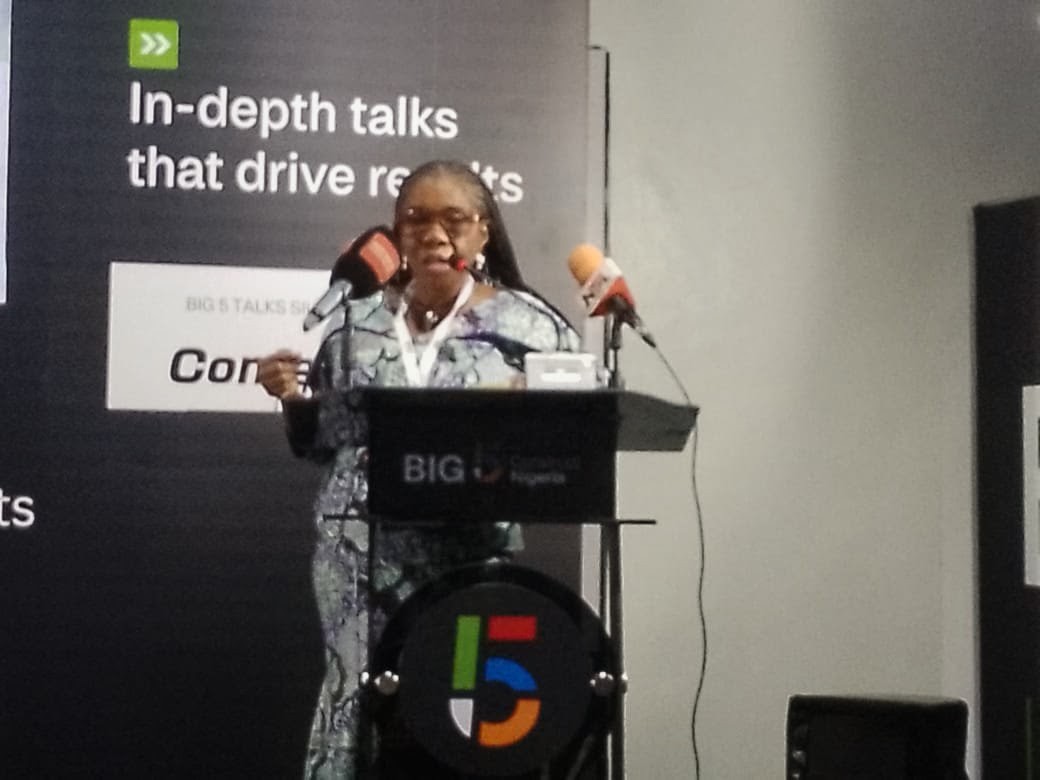
That was the blunt verdict of the President of the Nigerian Society of Engineers, (NSE)Engr. Ali Alimasuya Rabiu ably represented by the Deputy President of Nigeria Society of Engineers (NSE) Engnr.Valarie Agberagba, FNSE, at Big 5 Construct Nigeria 2026 in Lagos on Monday.
Delivering the keynote address on behalf of NSE President, Engr. Ali Alimasuya Rabiu, FNSE, Agberagba said Nigerians drive past the evidence every morning – roads under construction for years, housing estates with only a gatehouse standing, and power projects that never end.
“That is the state of our industry.
Not a shortage of work but a shortage of finished projects,” he said.
According to him, the country must move from “a pipeline of ideas to a pipeline of bankable, executable and maintainable assets.”
Demand Is Not The Problem
“The Nigerian construction market does not suffer from a lack of demand.
Our population is growing, our cities are expanding, and the need for housing, power, transport, water, and industrial infrastructure has never been greater,” Rabiu stated.
He argued that the real challenge is converting that demand into projects that can be financed, executed and sustained.
“A long list of needed projects is not the same as a pipeline of bankable projects.
The winners over the next decade will not be those who spot opportunities first.
They will be those who can structure, finance, and deliver projects consistently.”
The Four Forces Behind The Pressure
Rabiu anchored his argument on four forces driving Nigeria’s construction market:
Urbanisation, population, public investment and monetary policy.
As of 2023, 54% of Nigerians lived in urban areas a figure that has risen to 55.8% in 2026, with World Bank putting it at 63.78%.
Nigeria’s population stood at 232.7 million in 2024.
He noted that the Federal Government proposed N23.96 trillion capital expenditure in the 2025 budget for transport, power and water, yet the Monetary Policy Rate stood at 27.5% as of May 2025.
“Urbanisation concentrates needs, population expands it, capital expenditure fuels it.
MPR determines whether the projects can be financed at the expected speed needed. Demand is not in question.
Affordability, financing conditions, and delivery discipline are the real constraints.”
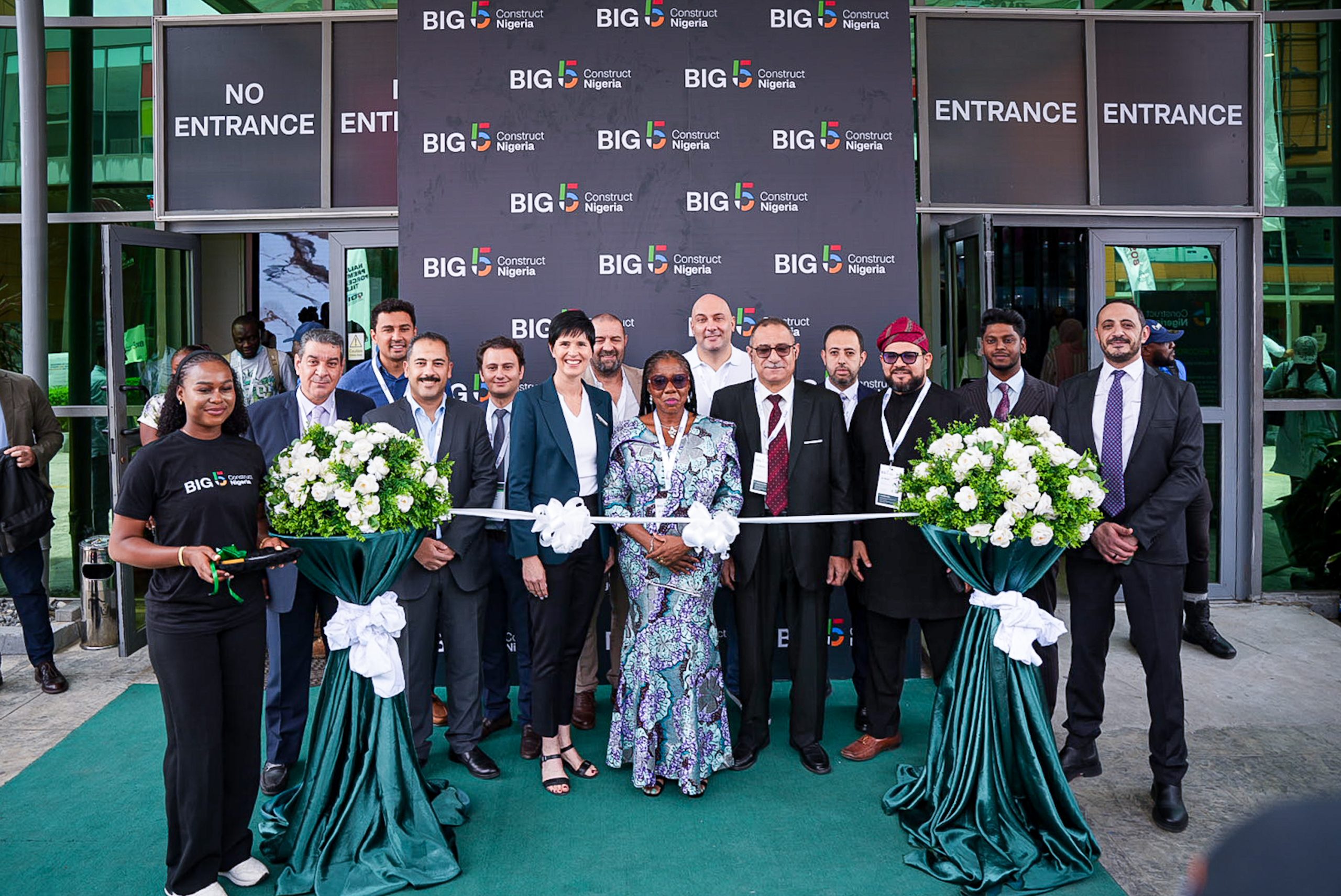 Photo Caption:Engr. Agberagba Valerie Ifueko, Deputy President, Nigerian Society of Engineers (NSE), alongside alongside Josine Heijmens, Senior Vice President dmg events, and Amr Hassan, Event Director, dmg events; in the presence of Ahmed Abdelfatah, Acting Executive Director, Export Council for Building Materials, Refractory & Metallurgy Industries; Alessandro Okigbo, Trade Analyst (CRM, Heavy Machinery, Agribusiness, Innovation and Technology & Construction Sector), ITA Lagos; Andrea Perugini, Commercial Attaché at the Embassy of Italy in Abuja; Dr. Michael Halim Tawadros, President of the Egyptian Community in Nigeria; Erdal Fatih Tozoğlu, Turkish Commercial Attaché; Iacopo Foti, Acting Ambassador of Italy to Nigeria; Maurizio Ferri, Director, ITA Lagos; Mohamed Attya, Egypt Pavilion Manager, EECA; and Mohamed Nedal, Administrative Attaché, ECS; Osama Mohey Alden, Minister Plenipotentiary, ECS. During the grand opening of the Big5 Construct Nigeria held today at Landmark event Center Oniru,Lekki Ajah Lagos
Where The Money Will Go
Looking beyond 2026, she said seven forces will shape the pipeline: urbanisation, infrastructure deficit, energy demand, industrial expansion, selective capital, cost volatility and rising quality expectations.
Opportunity is strongest where infrastructure unlocks wider economic activity, he said.
Energy & Power and Transport & Logistics present the highest relative opportunity, followed by Industrial, Housing, and Digital Infrastructure.
“Without power, industry stalls. Without roads and ports, commerce slows.
These are the foundations on which everything else is built.”
Do Not Procure Because It Is Approved
Most delivery failures, he warned, begin long before mobilisation.
“Do not procure a project simply because it has been approved. Procure it because it is ready.
A project can be approved at a cabinet meeting, listed in the budget, celebrated in a press release and still nowhere near readiness.”
he introduced NSE’s Gateway Model with eight clear stages: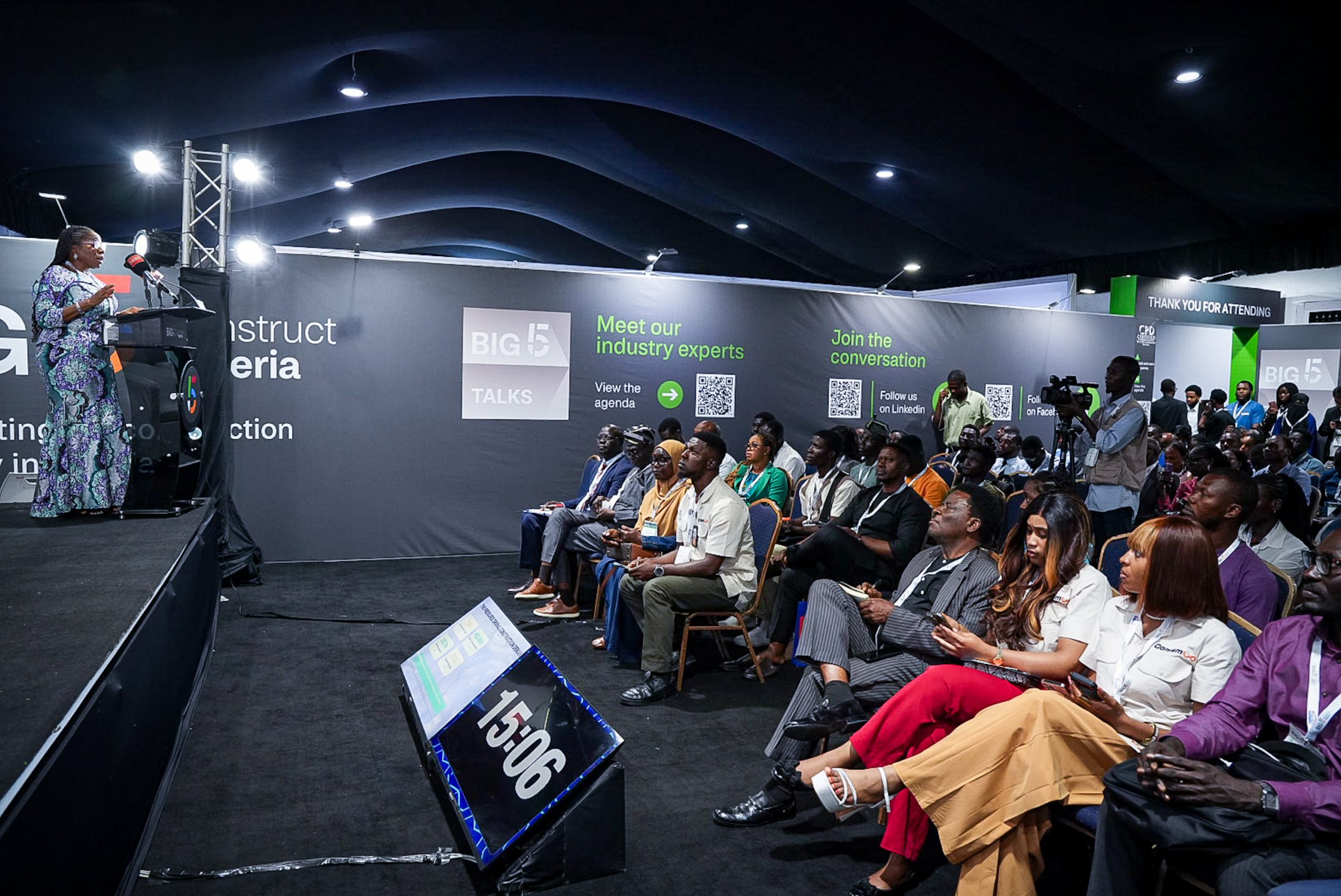
Prepare: Confirm need with verified economic case, test business case, freeze design scope and secure all approvals for land and permits.
Commit: Match capital structure to project economics and procure for competence and lifecycle cost rather than lowest bid.
Deliver: Build with quality and safety under control, then operate with funded maintenance.
“A project is only as strong as its weakest gateway.
This is one area in our procurement system that needs to be considered,” he said.
Building-Led vs Development-Led
Rabiu challenged developers to shift thinking.
A viable project is not simply a structure, but an integrated value proposition.
“Building-Led approach focuses only on construction while a Development-Led approach brings together market demand, land and planning, transport and utilities, finance and phasing, construction delivery, and operations and maintenance.”
Quality Is Not An Inspection
“Our nation pays repeatedly when quality is treated as an end-stage inspection.
The life of an infrastructure asset begins when construction ends,” he warned.
he prescribed five disciplines: Prepare better, finance responsibly, procure for value, execute professionally, and maintain consistently.
A Shared Responsibility
Delivery, he stressed, is a shared responsibility.
Government must provide direction and accountability, developers must bring responsible capital, contractors must deliver safety and quality, and engineers must uphold technical integrity.
He closed with a charge:
“So, when next you drive past one of those projects that has been ongoing for years, please feel something.
Not resignation, not a shrug, as we are all used to doing.
Anger! Followed by resolve.
That project is a road someone could have driven through, a house someone could have occupied or better still, power that could have helped a business to survive.
We can do this.
Let’s learn to build things to Finish!”