 Speaking the truth... | Town Crier News Nigeria | Whatsapp No: 08027723347, 08072777599,08122784467,09063474539

Written By Dedeigbo Ayodeji Samson
Posted By Town Crier News Nigeria
Published By Fitness Network Communications
ENGLISH FOR JOURNALISM: TRICKY USAGES JOURNALISTS SHOULD WATCH IN REPORTING, Polaris Bank Lectures Journalists
Akeem Lasisi a prolific writer ,Africa’s leading Performing Poet, lectures Journalist during a seminar Organised By Polaris Bank PLC, in Jevinik Place ,off Sobo Arobiodu ,GRA Ikeja ,Lagos State Southwest Nigeria.
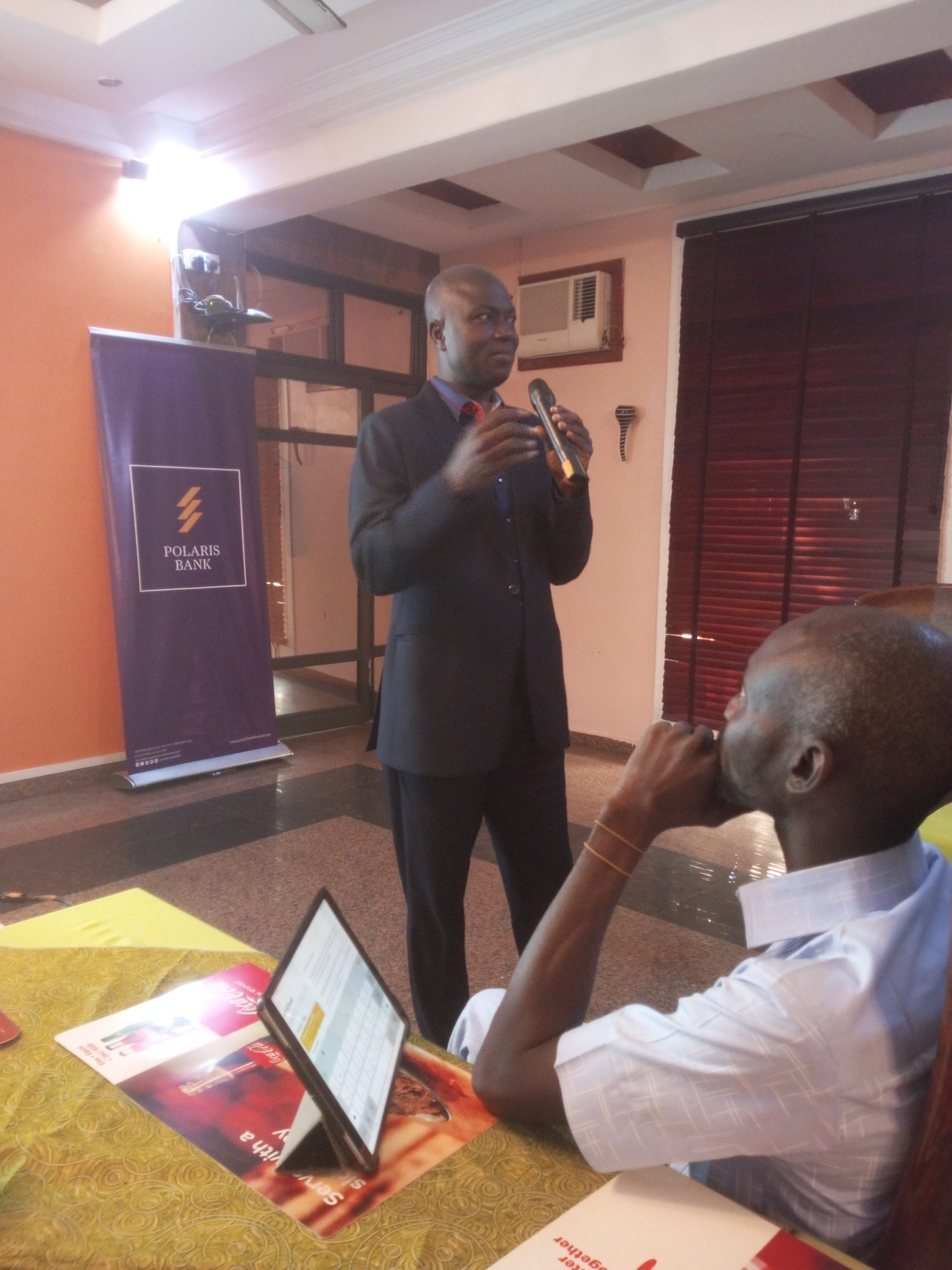
Akeem Lasisi, Africa’s leading Performing Poet during his Lecture with Journalists
1st Facilitator Akeem Lasisi, said, ” ENGLISH AS A GLOBAL LANGUAGE
English is a phenomenal language spoken by some 400 million people globally.
” It is spoken in up to 86 countries.
” It is the primary language of computer and the web.
” It is a dominant language of international politics, business etc.
“It is our primary tool as journalists. We should thus always upgrade our skills in it. We must shun complacency and overgeneralisation.
” SOME CHARACTERISTICS OF LANGUGAE
” Language is universal.
” Language is rule-governed.
“It is also conventional and arbitrary.
“As a result, we should always approach usages with an open mind.
” As
” BETWEEN SPEECH AND WRITING
“Speech is primary and spontaneous.
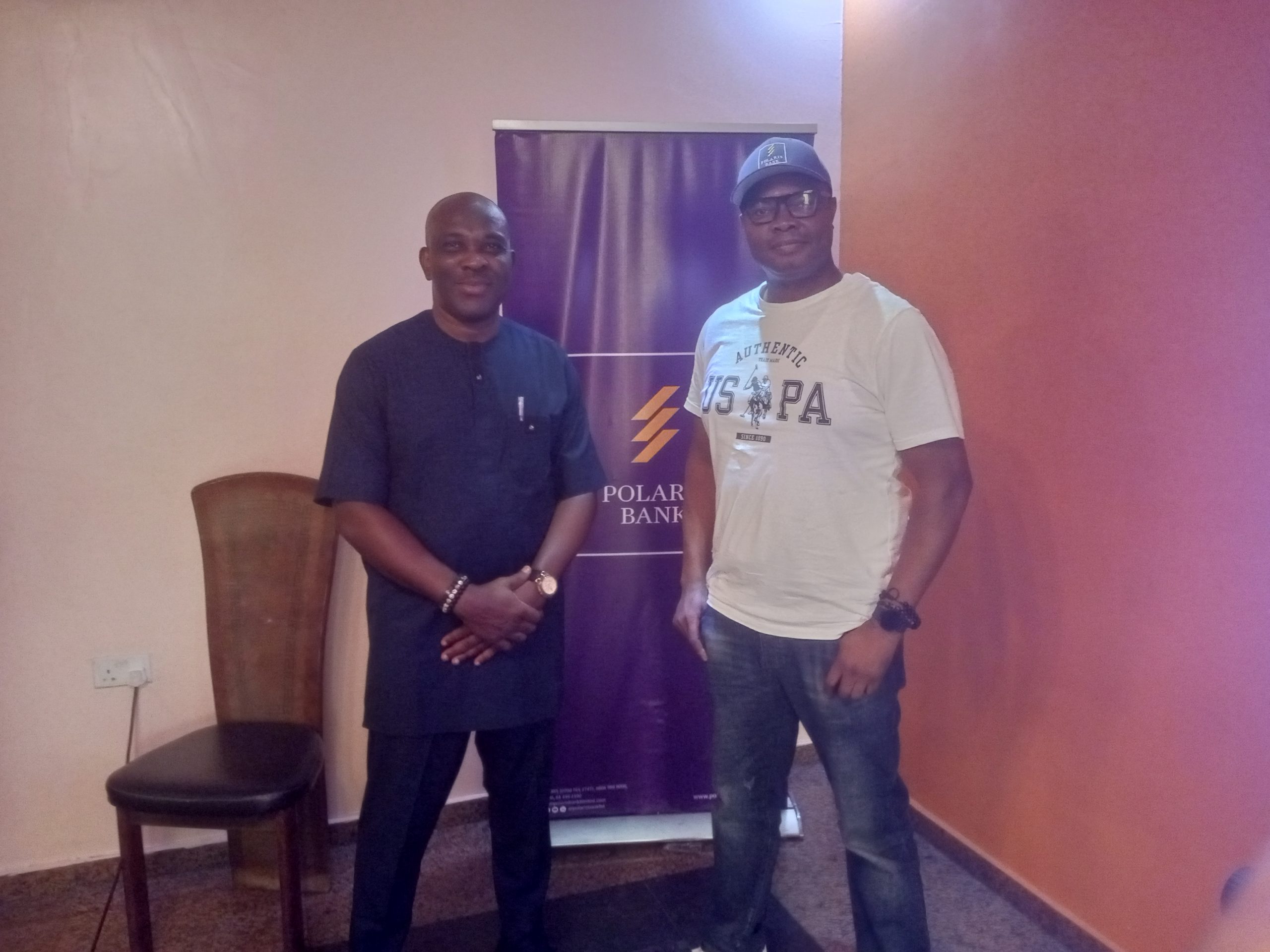
Photo Caption From L-R Polaris Bank’s Head, Corporate Communication, Rasheed Bolarinwa; Nduneche Ezurike, Group Head, Brand Mngt & CorporateComms
“Writing is secondary and more systematic.
“It is permanent. So, it must be handled with care and deliberateness.
“Writing is scientific because language is based on rules and conventions.
” But it is also an art. It can be flexible, embellished and made rich.
” MORE USEFUL HINTS
“Remember you are writing, no more speaking. So, obey all the rules of the written language.
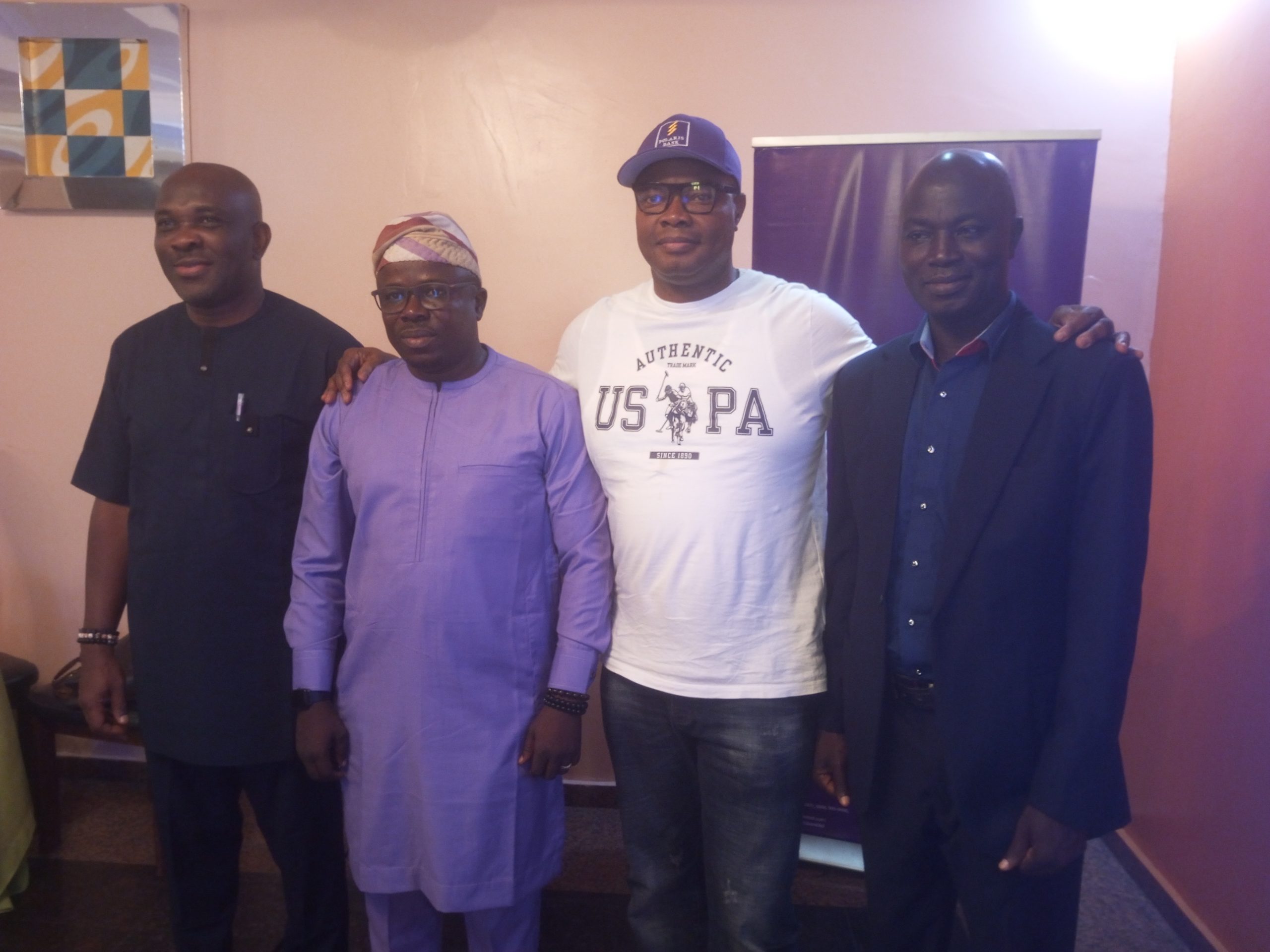
Photo Caption From L-R :Polaris Bank’s Head, Corporate Communication, Rasheed Bolarinwa; Sheriff Adekoya Communications &Brand Strategist, Nduneche Ezurike, Group Head, Brand Mngt & Corporate Communications, Akeem Lasisi, Africa’s Leading Performing Poet
” Always bear in mind the type of writing you are undertaking. A letter? An essay? A memo? A report? Observe the feature of each.
” Have a clear audience in mind.
” Understand the issue/content very clearly.
” Make an outline where necessary. Have a clear picture of what you want to write by first listing your points on some pad.
” Most official writings must have titles/headings.
” Arrange your points in clear, well-developed paragraphs.
“A paragraph must have a topic sentence which bears the main point or message. Other sentences build on the topic sentence.
“It is usually found at the beginning of the paragraph though it can also be in the middle or even at the end of it.
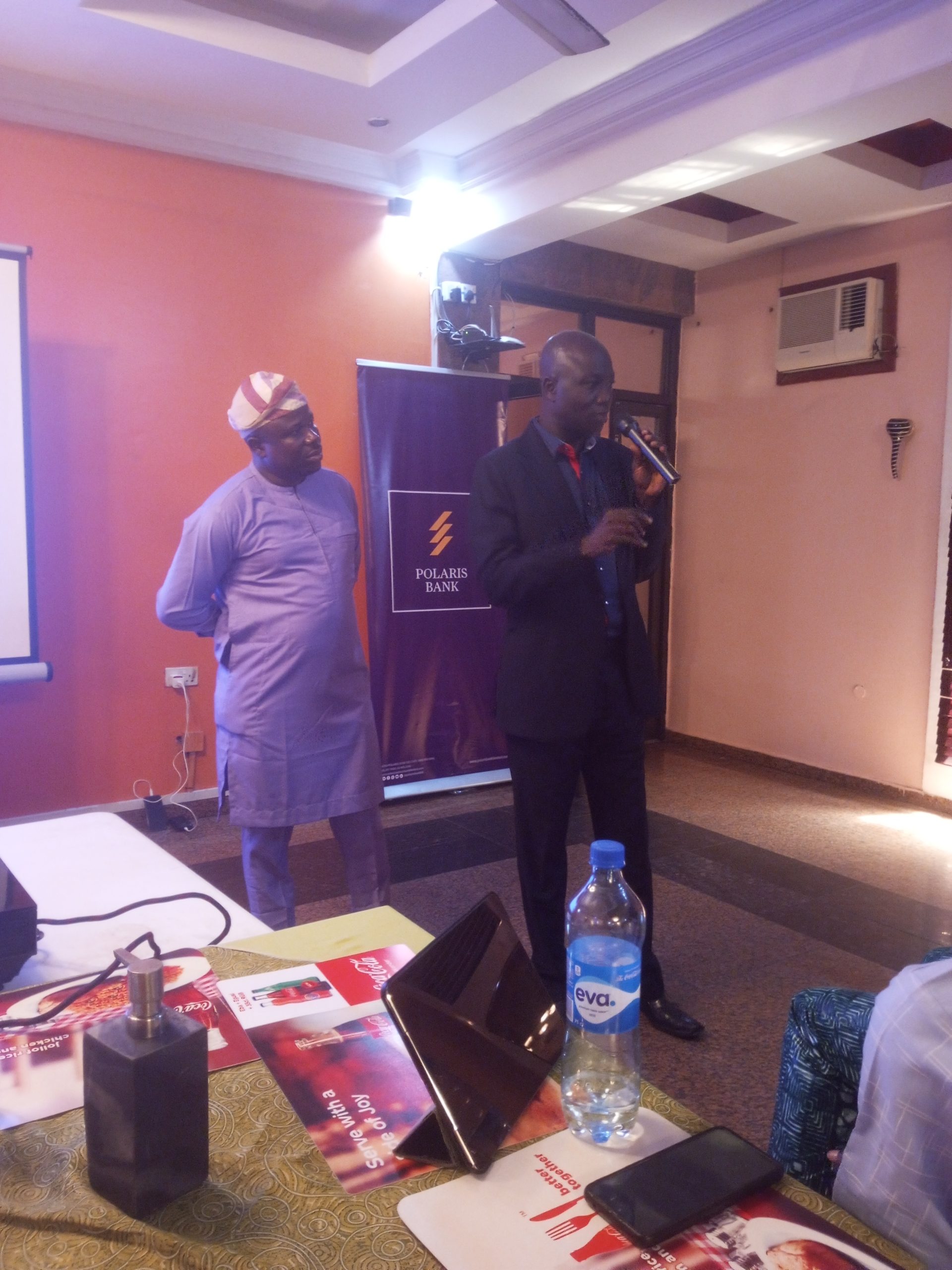
Photo Caption From R-L :Akeem Lasisi, Africa’s Leading Performing Poet Sheriff Adekoya, Communication & Brand Strategist
“The intro should be brief since it is only introducing the body of the writing. It should state what the piece (writing) is about.
” Write simple and correct English. Observe the rules of concord, tenses, articles, spellings, punctuating etc.
” Ensure you proofread your write-up before submission.
” This is crucial to avoid cheap mistakes.
” You can also ask someone else to take a look at your piece before passing it on to the authority requiring it.
” HOW MANY SENTENCES PER PARAGRAPH?
Normally, a paragraph is made up of some sentences.
” Depending on the type of writing, it can be between four/five and seven sentences. It can be less; it can be more – depending on style and level of professionalism too. Indeed, there are one-sentence and one-word paragraphs!
“PARAGRAPHING IN THE MEDIA: TRICKY?
“In many cases, it is one sentence, one paragraph in news writing. This aids clarity and helps readers to quickly absorb the news.
“But does it apply to features writing? Does it apply to columns or opinions? The answer is NO.
“ACTIVE OR PASSIVE VOICE?
“The active voice is highly recommended by many editors, scholars and other experts.
“It presents the subject performing the action in the clause.
“It thus projects the message sharply with emphasis on the doer and then the action. As a result, many sentences come in the active form, rather than the passive :President Bola Tinubu has appointed two more ministers.
” The Central Bank of Nigeria is introducing more measures to curb fraud.
“Yet, the passive voice has its own role in reporting. At times the doer of the action is unknown. At times you want to hoard or hide it, or place emphasis on the object/verb rather than subject:
” Two more ministers have been appointed by President Bola Tinubu.
” No fewer than 6 people were feared killed during a violence that broke out in the community on Friday. (You can’t yet say who killed them!)
“REPORTED SPEECH
Often, news is presented in reported or indirect speech.
“This is understandable since it is usually about things that have happened or someone talking about what will. A serious journalist should, as a result, master the art of the reported speech.
” FEATURES OF THE REPORTED SPEECH
– Quotation marks are eliminated.
– Some commas too.
– Verbs largely change to the past tense/past continuous or past participle.
– Adverbs of time and place also change forms:
The director said, “We upgraded our status last year.” (Direct speech)
“We upgraded our status last year,” the director said. (Direct speech)
“The director said they upgraded their status the year before. (Reported/indirect)
“EXCEPTIONS IN TERMS OF TENSE
– You may decide to render the report in the present tense – especially in feature writing. When you do this, you must ensure consistency. Consider this possible opening:
” For Funke Akindele, it has been a beautiful journey in the entertainment industry. She says any time she reflects on her experience, she thanks God and vows to remain in Nollywood even if she comes back to the world a million times.
” At times, stories do begin with quotes but this should not be lazily cultivated.
” ERRORS ASSOCIATED WITH IRREGULAR VERBS
Many verbs are irregular – changing from the present tense to the past/participle in unpredictable ways. Journalists should particularly handle them cautiously:
WRONG: They have began the work.
CORRECT: They have begun the work.
WRONG: I have swam.
CORRECT: I have swum.
“Others: sing, drink, run, hurt, quit and come.
“STATIVE VERBS REJECT THE CONTINOUS TENSE
Stative verbs show the state of being rather than indicating actions. Many of them are verbs of perception. Warning: they do not normally operate in the continuous form. Examples are hear, see, agree, remember, understand, know, suspect, love, feel, appear, seem and smell:
WRONG: I am hearing you.
CORRECT: I can hear you.
WRONG: She is seeing the board.
CORRECT: She sees/can see the board. SUNCTIVE MOOD
” TRICKY, TRICKY SUBJUNCTIVE MOOD
The rule of concord/tensing is crucial in English but the subjunctive mood does not obey it! Note these correct but seemingly odd usgaes:
It is high time we started the training.
I pray he go there.
I suggest she sleep first.
If I were Tinubu, I would reduce the fuel price immediately.
” NOUNS IN PAIRS
They are slippery to handle based on the way they show numbers/plurality. Examples are shoes, sandals, glasses, pants, jeans, trousers and shots.
Wrong: The shoe I am wearing is dirty.
Correct: The shoes I am wearing are dirty.
WRONG: My pant is green.
Correct: My pants are green.
“PROPER NOUNS
Proper Nouns should normally begin with capital letters. They include names of humans, countries, towns, villages, regions, days, months, academic courses, rivers, mountains and festivals. The terms in bold letters below are proper nouns:
The event organised by The Great Club held in March at the Ipapo Beach near Akudge, a village in Edo State.
” NON-COUNT NOUNS
Some popularly mishandled non-count nouns include infrastructure, equipment, news, information, rubble, offspring and drainage.
” SPELLING PALAVER
Poor spelling exposes one to ridicule! So, be careful. Here are some commonly misspelt words: occasion, occurrence, liaise, February, privilege, accommodation, commission, omission, unnecessary, resurrection, pronunciation, cigarette, catarrh, exaggerate and expatiate.
Beware of homonyms: lose, loose, choose, chose, pitch, pit, where, were, their, there, been, being; cloth, clothes, pit and pitch.
People’s names: Mohammed? Mohammad? Muhammadu? Ogunsola or Ogunshola? The former Chairman of Punch Nigeria Limited, Chief Ajibola Ogunshola, has ‘h’ in his name while others spell theirs as Ogunsola.) Peters, Peter? Netherlands, Sierra Leone etc.
British or American spelling? – colour, centre, defence, pretence, practice, license/license, advice/advise, counselling, counselled and marvelled (all British English).
” TAUTOLOGICAL!
Avoid undue repetition and tautology:
in close proximity, New innovation, 5 am in the morning, night vigil, morning breakfast, afternoon lunch etc.
” TRICKY ADJECTIVES
– Ghastly or fatal? In a fatal accident, at least a life (human) is lost but the terrible one in which no life is lost is ghastly.
– Insulting vs ‘insultive’ (Correct word: insulting)
– Tricky or trickish? (Tricky)
” A vs AN
The position of either A or AN is defined by the sound that begins the word it precedes, not the letter that starts it. So, ‘a’ is used with the word that begins with a consonant sound (not just a consonant letter) while ‘an’ precedes the word that starts with a vowel sound:
I need a bed.
I want an idea.
WRONG: An European ambassador has arrived.
CORRECT: A European ambassador has arrived.
Also: a united Nigerian, a utility player and a euphemistic expression.
Remember the THE in the Netherlands the Congo, Ireland, US, UK, the UNO, the Christian Association of Nigeria, the Muslim Rights Concern.
Also: the late Otunba Subomi Balogun. Not late Otunba Subomi Balogun.
” SOME PREPOSITIONS TO WATCH
NOTE: charge with, accuse of, convict for, test positive for, immune to, on the outskirts of, on the grounds that, on the premises, on campus, on Island, dispose of, wash hands of, round up or round off? etc.
We request something, not request for. Same with demand, solicit, advocate and order. It is only when they are used as nouns that they take ‘for’: the request for something.
” PUNCTUATION ISSUES
Handling the full stop, comma in direct speech
The full stop within/outside quotes? Comma before or after?
Watch commas in apposition:
” MISSING COMMA: Beauty, they say is in the eyes of the beholder.
CORRECT: Beauty, they say, is in the eyes of the beholder.
Consider the following too:
He, however, noted that …
He, indeed, insisted that …
He, as a matter of fact, will not be there.
” SHARPENING YOUR PRONUNCIATION
Media is now multi-media. So, beyond honing the writing skill, we should sharpen our pronunciation profile and other elements of oral English too. There should be some deliberateness whenever we are speaking English.
Which one are you pronouncing: short or long vowels?
Bit vs beat
Sit vs seat
Cat vs cart
Bad vs bard
Voiced or voiceless consonants?
Ferry: very
Sip: zip
Access or assess? Set or sect?
Cop or cup? Shot or shut?
” TRICKISH TH WORDS
Tin or thing? Tree or three? Dose or those?
” SILENT SOUNDS
Remember, T is silent in listen, castle, wrestling, rustle and whistle.
B is silent in comb, bomb, thumb, climb and debt.
Kindly check out other silent elements in English.”
Also speaking second Facilitator,Sheriff Adekoya,said ,” In 1850, an epidemic swept America—but instead of leaving
victims sick with fever or flu, this epidemic involved a rabid
craze for the music of Swedish soprano Jenny Lind. American
showman P. T. Barnum (who would later go on to found the circus now known as Ringling Bros. and Barnum & Bailey), a shrewd marketer and self-made millionaire, is credited with spreading “Lindomania” through a series of astute
show-business moves.
” Media intelligence is a powerful tool that helps businesses learn more about their customers, competitors, industry, and even their own brand via the media.
” However, the tide has changed; Strategic Media Intelligence, from the angle of cultural Concerns, runs deeper.
” It touches on how we as professionals Intelligently align our skills and tools in growing and sustaining relevance in the wake of Cultural Shift.
” Cultural Shift in this regards runs through the dictate of Generational
” Differences in the face of media consumption and more.
” Many of us in Communications, Marketing and PR are fighting one professional battles after another.
” In media intelligence we must all learn new skills
(tricks) and take on quests to become better
players and reach the end game.
” In any media career, you will regularly have to step out of your comfort zone pand level up.
” This conversation is a smart switch from Media
Monitoring, to a Cross Cultural Comms
intelligence.
“Cross Generational Communication
Who are you
tawkin to…
me?
” The Big Five We are living during a unique time where there are five different generations in the workplace.
” The birth years for each generation will be
different depending on your source, but generally the generations are defined as the following: Silent Generation (1925 – 1945) Baby Boomers (1946 – 1964) Generation X (1965 – 1979) Millennials
(1980 – 1994) Generation
what is MEDIA?
What is MEDIA?
” This is a term which covers all the means
of communication which have functions
such as informing, raising awareness,
education, socialization, entertainment
and agenda setting, including all kinds
of oral, written and visual images.
Delivery media such as television, Internet, and
video used in teaching, learning and beyond!
“What is CULTURE?
Culture (from the Latin cultura stemming from
colere, meaning “to cultivate”) generally refers to
patterns of human activity and the symbolic
structures that give such activities significance and importance.
” Culture has been called “the way of life for an entire society.” As such, it includes codes of manners, dress, language, religion, rituals, art. norms of behavior, such as law and morality, and systems of belief.
“An understanding of culture requires an understanding not only of language differences, but also differences in knowledge, perceptions,
beliefs, attitudes, and behaviors.
“The biggest take out: CULTURE is set of
CONSISTENT PATTERNS
“And in this age, this does not necessary need to be traditional or aboriginal.
It is majorly evolutional, and it can be infectious.
“CULTURAL MIGRATION
MEDIA The ENABLER
TECH FUEL
” PopTALK: The Marriage of Culture and Communications
Cultural Resonance
Emotionally Engaging
Distinctiveness
Remove Friction
Scale
Motivate Action
A
B
C
D
E
F
“Conversation of Lingo, Media and Culture….
● Gbas Gbos
● Ji ma sun
● Oshee baddest!
● Mad o!
● Inside Life”.